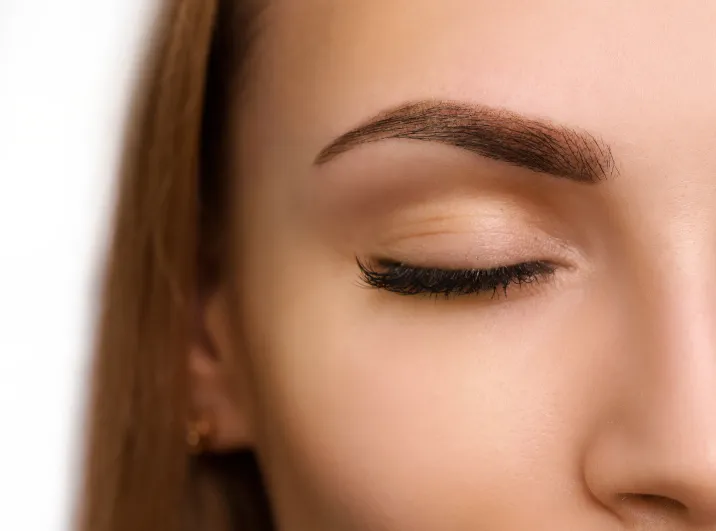
Eyebrows are very effective in making expression pronounced and giving the face dimension.
With the development of aesthetic surgery, many treatment methods have been developed for people who are unhappy with their eyebrows, have sparse eyebrows, or whose eyebrows do not grow because of accidents, burns or illness. Eyebrow transplantation, one of these methods, makes eyebrows much thicker and well shaped.
When it comes to eyebrows, even though cosmetic methods and eyebrow care methods make eyebrows full and shaped, these methods are not completely permanent. Therefore they have to be repeated every day or at certain intervals. These eyebrow care methods, which have to be repeated often amid the rush of daily life, both take a lot of time and are a financial burden. Eyebrow transplantation, on the other hand, takes its place as a better alternative to other methods both in determining the correct eyebrow structure with the help of a specialist doctor and in helping people who want an eyebrow transplant achieve the look they desire.
Eyebrow transplantation is performed with the DHI Pen Technique, like hair transplantation. First, as in hair transplantation, hair follicles (grafts) are taken from the donor area – usually the nape area is chosen as the donor area – and are kept in a special solution so that no follicles are lost. Afterwards the harvested grafts are transplanted one by one in the determined angle and shape. Eyebrow transplantation is one of the most correct methods for people who want a permanent and natural look.
Since eyebrows are one of the most important areas of the face, the transplant must be performed meticulously by specialist doctors and teams, taking the shape of the face into account and based on the patient's wishes. When an eyebrow transplant is performed by non-specialists, there is a possibility of many complications. In addition, you are also likely to face undesirable problems such as marks or permanent damage on your face.
What to Pay Attention to After an Eyebrow Transplant
After an eyebrow transplant, slight redness and scabbing are seen in the eyebrow area. One of the most important points to pay attention to after eyebrow transplant surgery is not to try to pick or pluck off these scabs by hand.
On the first day after the eyebrow transplant operation you should avoid contact with water and protect your forehead area against blows. In the first days after the eyebrow transplant, the transplanted eyebrows will be sensitive and prone to shedding, so you must be very careful with your eyebrow transplant area.
In the first days following your eyebrow transplant your eyebrows may look thin and weak, but over time they will look thicker and more natural. One of the most important points for patients who want an eyebrow transplant to know is that it takes a certain time for the eyebrow to take its full shape after the transplant. New eyebrows begin to grow within three months after the eyebrow transplant operation. Within eight months the desired full and natural eyebrows can be achieved. During this process you must follow the instructions Dr. Kinyas gives you and not neglect your eyebrow care.