Hair Transplant Aftercare and Recovery Guide
Learn what to expect from surgery day to month 12, how to manage daily care and when to contact your clinic.
With you from day one to month 12.
Every recovery journey is individual.
The day of surgery is day 0; the following day is day 1. Follow the personal care plan you have been given.
This guide mainly covers general care after FUE graft harvesting and implantation, including DHI. FUT or a procedure with stitches, an open wound, another medical condition or a complication requires a separate care plan. The timeline is not a guarantee of results.
STEP-BY-STEP FOLLOW-UP
Which stage of recovery are you in?
Choose your current stage to find what to do, changes you may notice and signs that need attention.
Surgery day
The first evening, sleep and medicines
01—03The first three days
First wash, swelling and movement
04—07The rest of the first week
Donor area and itching
07—10Scab care
Softening and safe care
10—30Returning to daily life
Showering, exercise, work and haircuts
MONTHS 01—03Shedding and waiting
Shock loss and scalp care
MONTHS 03—06Early growth
New hairs and progress
MONTHS 06—12Thickening and follow-up
Assessing the outcome
UNDERSTAND CARE THROUGH IMAGES
Three essentials for the first days

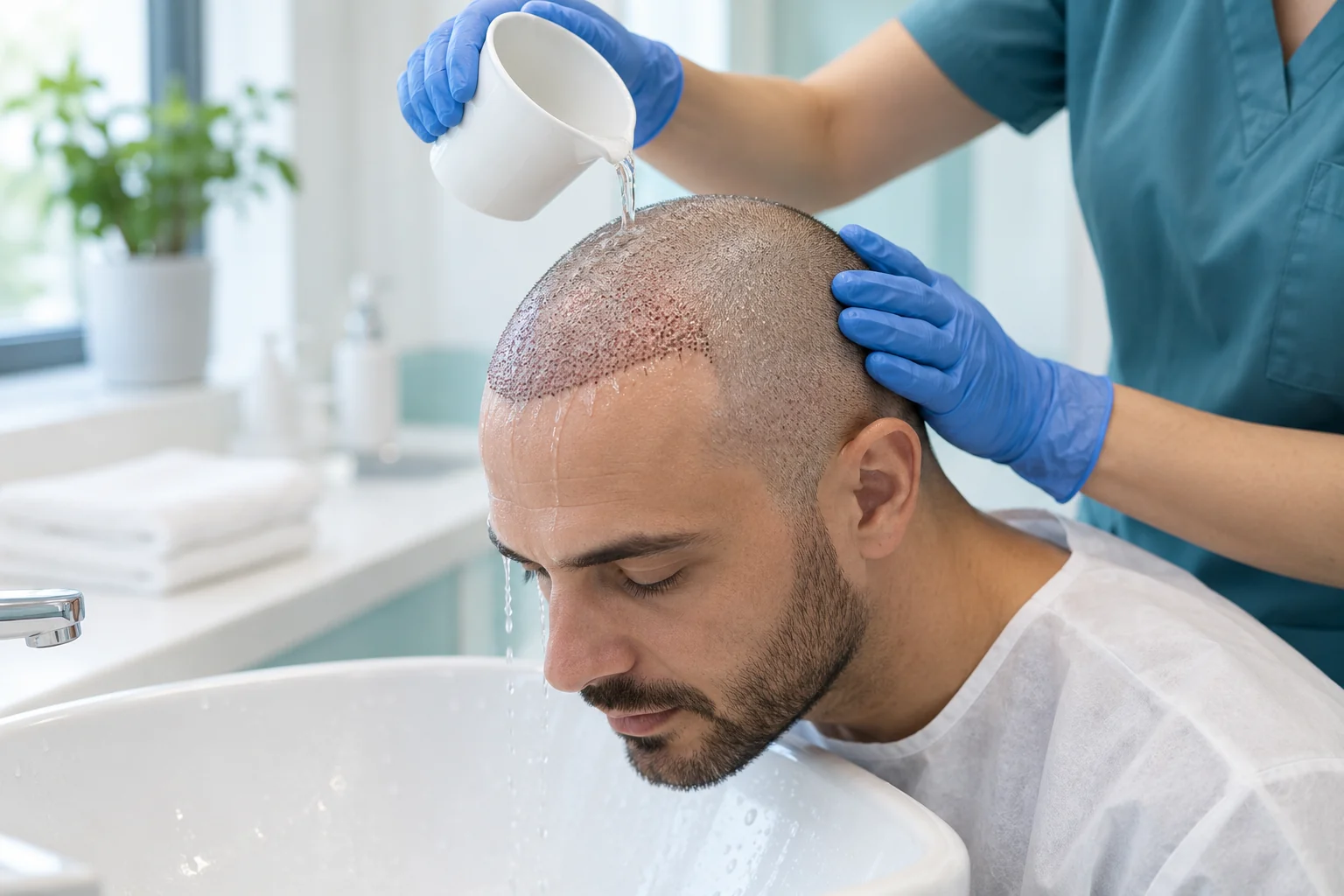
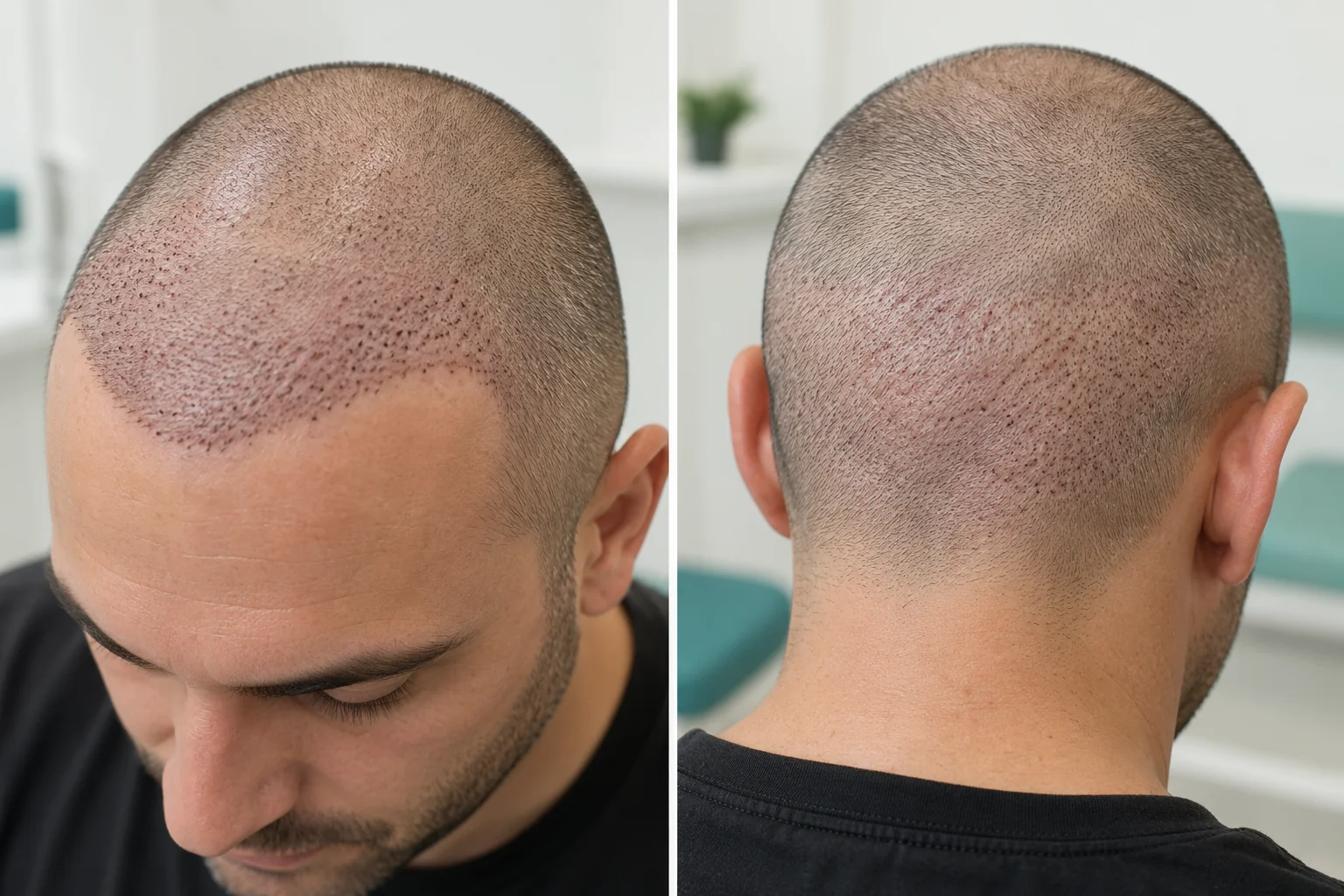
Surgery day
What may be normal at this stage
Mild tenderness and slight oozing may occur. Symptoms that keep getting worse should not be treated as expected healing.
Today, focus on resting, protecting the recipient area from knocks and following your personal instructions.
The first evening and sleep
Avoid hitting your head on car doors or nearby objects. Wear loose-necked or front-opening clothes. Sleeping on your back with your head and upper body raised for the first few nights may help manage swelling. If you use a neck pillow, make sure it does not press on the recipient area or a sensitive donor area.
Eating, drinking and movement
If you feel well, eat regular, balanced meals and drink water. If you have a fluid restriction, follow your own doctor’s plan. Short walks around the house are reasonable; avoid heavy lifting, strenuous activity and prolonged bending forward.
Medicines and safe travel
Use medicines only as prescribed for you. Do not stop or restart your regular medicines on your own. If you received a sedative, do not drive for the period specified and do not travel alone. Avoid alcohol on the first day.
Washing and dressings
Wait until the time you have been given for the first wash and dressing removal. Do not rub the recipient area or apply creams, oils or antiseptics unless your clinician recommends them.
Contact the clinic the same day
Contact the clinic the same day for ongoing bleeding, more pain than expected or a marked colour change.
See emergency signs and what to do →Clinical practice advice; direct comparative evidence on sleep and activity schedules is limited. Sources and limits of the evidence →
Back to recovery stages ↑Days 1–3: Initial care
What may be normal at this stage
Mild swelling, small scabs and tightness may occur. Seek assessment for severe or rapidly increasing swelling.
Mild tenderness, small scabs and slight oozing may occur. Forehead swelling may become more noticeable in the first days and then settle.
The first wash
If your clinic has told you to start washing, wash your hands first. Apply the recommended product as demonstrated and rinse with lukewarm, low-pressure water. Do not scrape the recipient area with your nails or rub it with a towel. Follow your personal care instructions for how long to leave the product on and how often to use it.
Swelling and sleep
Continue sleeping with your head raised. If a cold compress has been recommended, apply it to the forehead through a thin cloth without touching the recipient area. Do not put ice directly on the skin.
The back of the head and dressings
Remove the dressing at the specified time. Clean the donor area gently as instructed and do not pick off scabs. Report increasing pain, discharge or a dark colour change.
Movement and travel
Short, gentle walks are reasonable. Postpone running, heavy lifting and activities with a risk of impact. Protect your head while travelling, ask for help lifting luggage and keep to your follow-up plan.
Contact the clinic the same day
Contact the clinic the same day for increasing pain, spreading redness or warmth, fever, pus or an unpleasant smell.
See emergency signs and what to do →Expert consensus and clinical review; there is no single universal day for the first wash. Sources and limits of the evidence →
Back to recovery stages ↑Days 4–7: The rest of the first week
What may be normal at this stage
Dryness and mild itching may occur; do not scratch with your nails. Increasing pain or discharge is not a routine care issue.
Itching and dryness may develop. As swelling generally subsides, gentle daily care remains important.
Itching and washing
Do not scratch with your nails. Continue the recommended washing routine and do not add new products. Send a photograph if itching is severe, a rash is widespread or there is discharge. Do not force scabs off the recipient area at this stage.
The donor area
If your clinician agrees, gently moving the fingertips over softened donor-area scabs may be appropriate from around days 5–7. Ask for a review first if there is an open wound, increasing tenderness or dark scabbing.
Returning to work and social life
If you feel well, you may return to desk work and quiet social activities. Agree a return date with your clinician for dusty work, strenuous tasks or work requiring a hard hat. Avoid tight hats or helmets that press on the recipient area.
Sleep
As swelling and tenderness settle, ask your clinician about returning to a comfortable sleeping position. Continue protecting the recipient area from friction and pressure.
Contact the clinic the same day
For severe itching, a widespread rash, discharge or darkening of the donor area, request same-day assessment with a photograph.
See emergency signs and what to do →Clinical review and practice advice; donor-area care depends on the condition of the wound. Sources and limits of the evidence →
Back to recovery stages ↑Days 7–10: Scab care
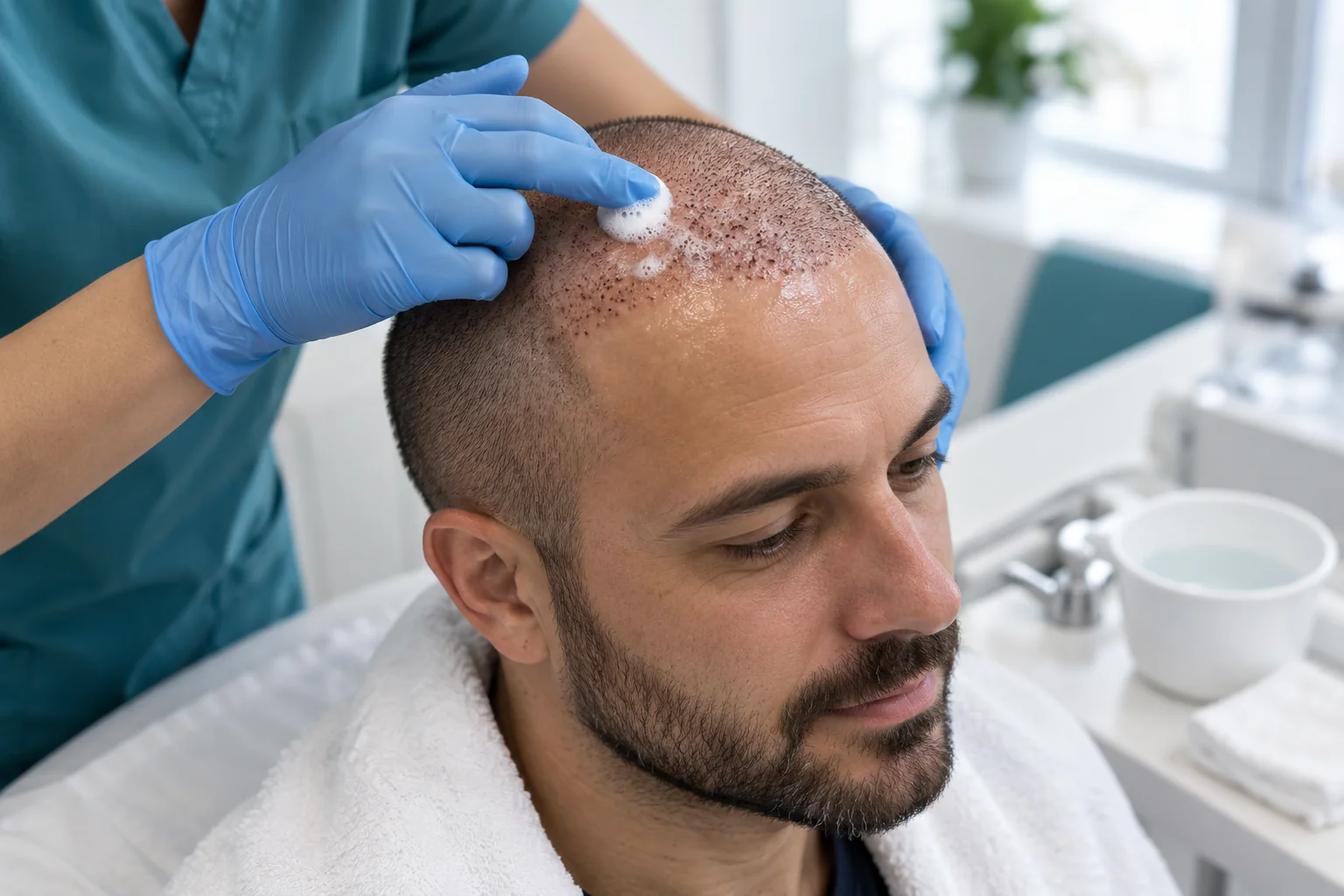
What may be normal at this stage
Small, softened scabs may come away with hair shafts attached. This appearance alone does not prove graft loss.
Day 10 is a useful review point, not a deadline for forcibly removing every scab.
- Soften. Apply the recommended lotion or foam with clean hands and leave it on for the time you have been told.
- Rinse. Use lukewarm water at low pressure.
- Clean gently. If your clinician has agreed, use the soft pads of your fingertips for light circular movements. Do not use your nails.
- Do not force it. Soften any scabs that do not come away again during subsequent washes.
A hair shaft coming away with a scab does not, by itself, mean a graft has been lost. Tell your clinic if there has been an impact, significant bleeding or separation of a piece of tissue.
Contact the clinic the same day
Do not force removal from painful, dark, thick or easily bleeding areas. Ask for a review if adherent scabs remain on days 10–14.
See emergency signs and what to do →Small mechanical graft-anchoring study and clinical review; a safe threshold for vigorous massage in modern DHI has not been established. Sources and limits of the evidence →
Back to recovery stages ↑Days 10–30: Returning to daily life

What may be normal at this stage
The rate at which redness and tenderness settle varies. Hair shafts may begin to shed; do not resume your usual products before the skin has healed.
Return to normal activities gradually as scabs clear and skin heals. Open wounds or tenderness may extend these times.
Showering and sleep
Gradually return to normal washing once the skin has healed. Use lukewarm water and a gentle shampoo; do not rub open or tender areas. You may gradually return to your usual sleeping position if there is no friction or pain.
Haircuts
If the skin has healed, a scissor trim without touching the skin may be considered from around the second week. For clippers with a guard, waiting until around week four and obtaining your clinician’s approval may be appropriate. Avoid razors and straight razors early on. These times are not firm boundaries established by research.
Sun, sea and swimming pools
Avoid sunburn, particularly in the first 2–4 weeks. Choose shade and a loose hat approved by your clinician. Do not swim while there are open wounds or scabs; ask for a healing review before returning to pools, the sea, saunas or steam baths. Do not put sunscreen on an open wound.
Exercise and sexual activity
Start with gentle walks during the first week. Increase activity gradually over the following weeks according to bleeding, pain and healing. Plan heavy weights, intense cardio and contact sports with your clinician. Pausing sexual activity for the first few days, then returning without pressure, impact or excessive exertion if there is no pain or bleeding, is a reasonable approach. No single day has been proven safe for everyone.
Shock loss
From the early weeks, transplanted hair shafts and sometimes nearby existing hairs may shed temporarily. Shedding of a shaft does not mean the follicle has been lost; the hair may look thinner for a while.
Styling and colouring
Do not apply gel, sprays, dye or chemical treatments to open or irritated skin. Once the skin has fully healed, discuss restarting these products with your clinician.
Contact the clinic the same day
Report new or increasing pain, spreading redness or discharge. Do not squeeze painful spots.
See emergency signs and what to do →Return-to-activity times are largely based on expert opinion; skin healing and your individual plan take priority. Sources and limits of the evidence →
Back to recovery stages ↑Months 1–3: Shedding and waiting
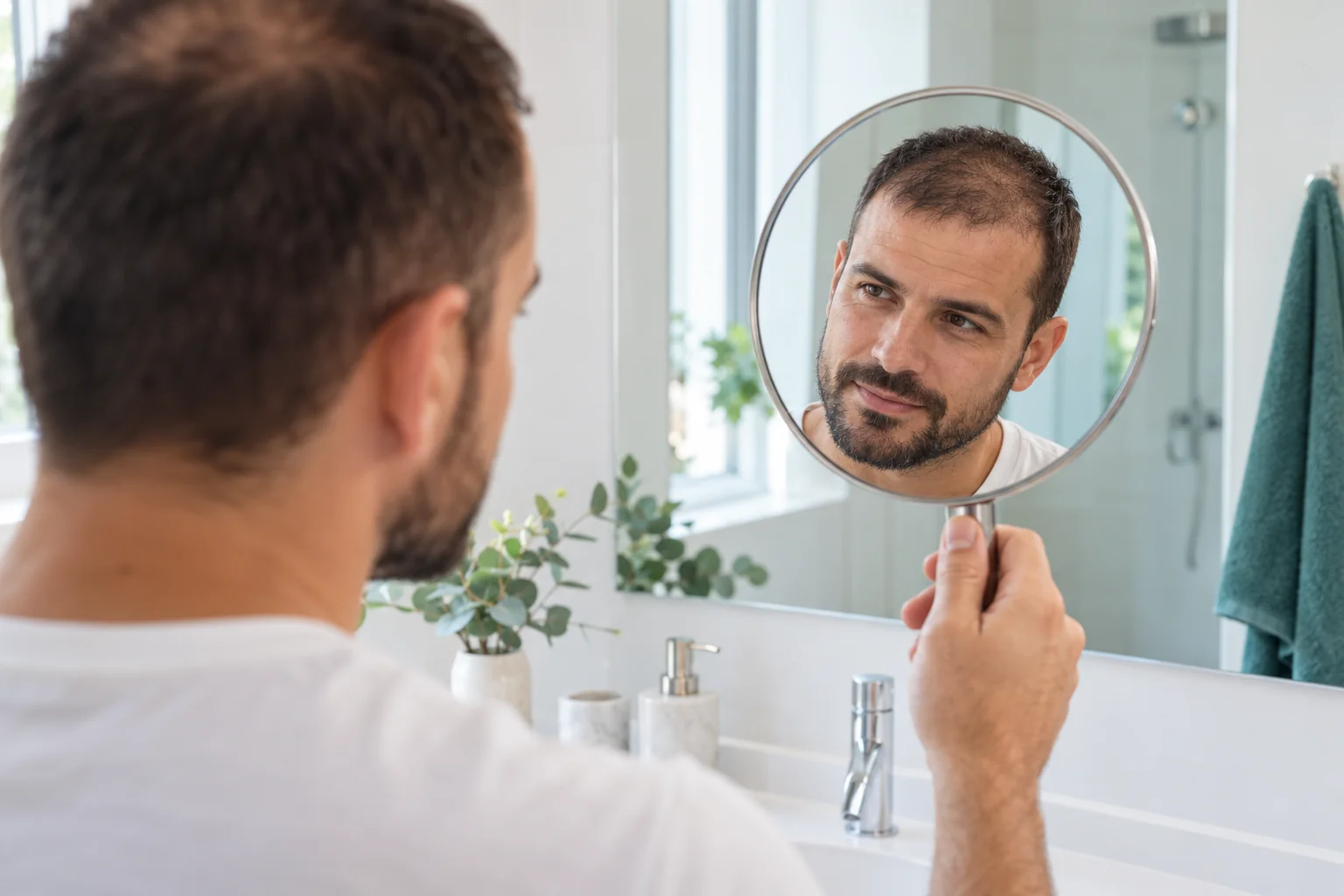
What may be normal at this stage
Temporary thinning and differences related to the hair cycle may occur. Existing hair loss may also continue; not all shedding should be assumed to be temporary.
If new hairs are not yet obvious, this alone does not mean the procedure has failed at this stage.
The scalp
Hair may look sparse for a while after shock loss. The first new hairs may be fine or irregular. Wash with a shampoo suited to your scalp and avoid harsh exfoliation or scraping. Do not squeeze spots; request a review if lesions are increasing, painful or discharging.
The donor area
Temporary changes in sensation or thinning may occur. Report increasing pain, new swelling or an area that is not healing.
Medicines and supportive treatments
Minoxidil or finasteride is not started automatically for everyone. Benefits, side effects, pregnancy-related risks and timing require a personal medical assessment. Do not apply minoxidil to open or irritated skin unless instructed. PRP and vitamins are not mandatory for everyone; deficiencies and potential benefit are assessed individually.
Everyday life
Return to work, exercise and social activities when the skin has healed. Do not start dermarolling or other microneedling procedures without a medical assessment.
Contact the clinic the same day
Contact the clinic the same day for increasing, painful or pus-filled spots, new swelling or areas that are not healing.
See emergency signs and what to do →Clinical review and patient information; the reason for shedding and need for treatment are individual. Sources and limits of the evidence →
Back to recovery stages ↑Months 3–6: Early growth
What may be normal at this stage
New hairs may be fine and grow at different rates; the starting time varies. Month six is not the final result.
New hairs generally begin to become visible during this period, but some people start later. Hairs may be fine, curly or grow at different rates. The frontal area and crown do not have to progress at the same pace.
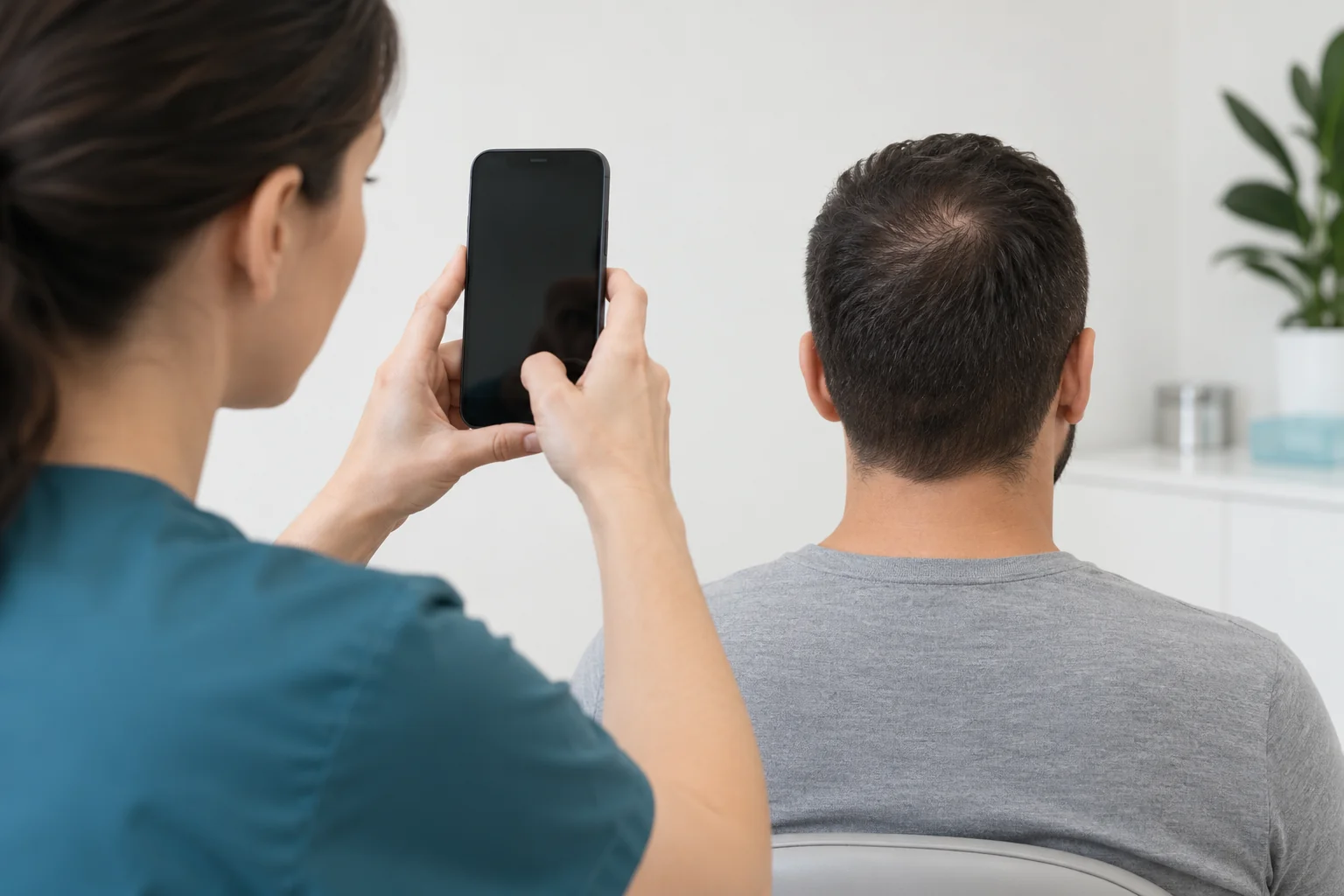
Take photographs at months three and six in the same lighting and from the same angles. Have increasing redness, painful swelling or persistent spots assessed. The appearance at month six is not the final result.
Contact the clinic the same day
Have increasing redness, painful swelling or discharging lesions assessed the same day. Discuss growth concerns at a scheduled review.
See emergency signs and what to do →Patient information and clinical follow-up advice; the times are approximate ranges. Sources and limits of the evidence →
Back to recovery stages ↑Months 6–12: Thickening and outcome review
What may be normal at this stage
Thickening and coverage change over time; crown maturation may continue beyond 12 months. A particular density at a particular month is not guaranteed.
Appearance and coverage continue to change as the hair grows. Progress varies between people and areas; an exact density percentage at a specified month cannot be guaranteed.
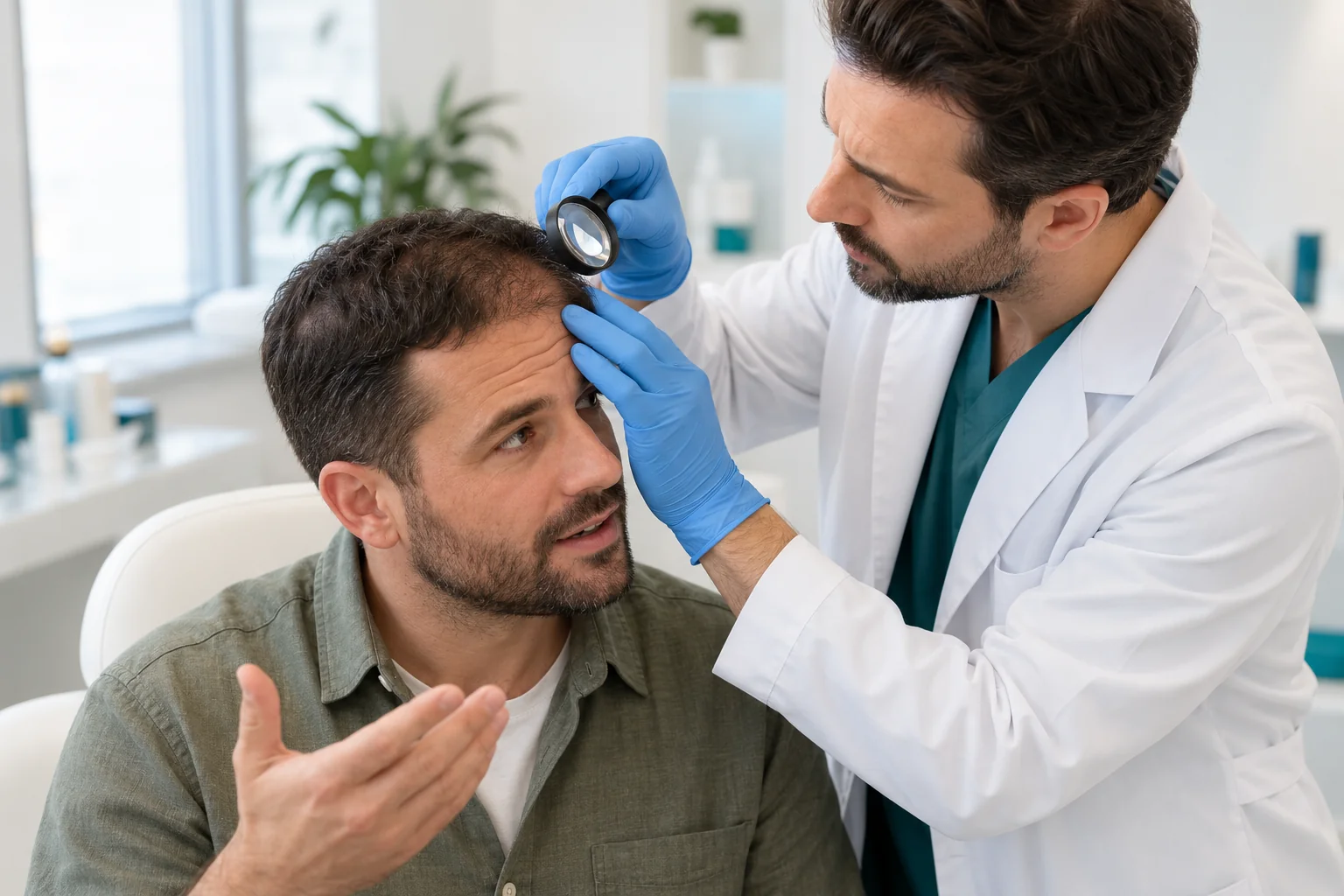
Review progress with your clinician using photographs at months six and 12. In some people, particularly at the crown, maturation can take longer than 12 months. A second session is considered by assessing the current result, donor reserves and expectations together.
Contact the clinic the same day
Report new pain, swelling, discharge or an area that is not healing the same day. Discuss density and additional sessions with your clinician using follow-up photographs.
See emergency signs and what to do →Patient information and clinical follow-up advice; results may take longer than 12 months to mature. Sources and limits of the evidence →
Back to recovery stages ↑FIND BY TOPIC
Quick access by topic
Can I smoke or use an e-cigarette?

Smoking can impair wound healing. The best approach is to stop before surgery and not smoke afterwards. Tell your team if you use an e-cigarette or nicotine treatment and plan smoking-cessation treatment with your doctor.
When can I drink alcohol?
Do not drink alcohol on the first day. Also avoid it while taking sedatives or medicines that interact with alcohol, or if you have bleeding or dizziness. Ask your clinician when it is safe in relation to your medicines.
What should I eat? Do I need vitamins?

Choose balanced meals, adequate protein and fluids. Keep coffee and tea moderate; reduce them if they cause palpitations or sleeplessness. Not every patient needs supplements; your clinician assesses deficiencies and other health conditions.
Can I fly or go sightseeing?

Travel is possible for many patients if they feel well and it fits their follow-up plan. Protect your head from knocks, avoid lifting heavy luggage and carry your medicines with you. Seek individual advice if you have a particular medical condition.
When can I resume sexual activity?
Pause for the first few days, then discuss a gradual return with your clinician according to healing. Avoid pressure or impact on your head. Research has not established one exact day for everyone.
Can sweating or walking damage the grafts?
Sweating during a gentle walk is not the same as intense exercise. Avoid strenuous exertion, friction and impacts early on; follow your clinician’s washing plan.
What is the difference between shampoo, foam and lotion?
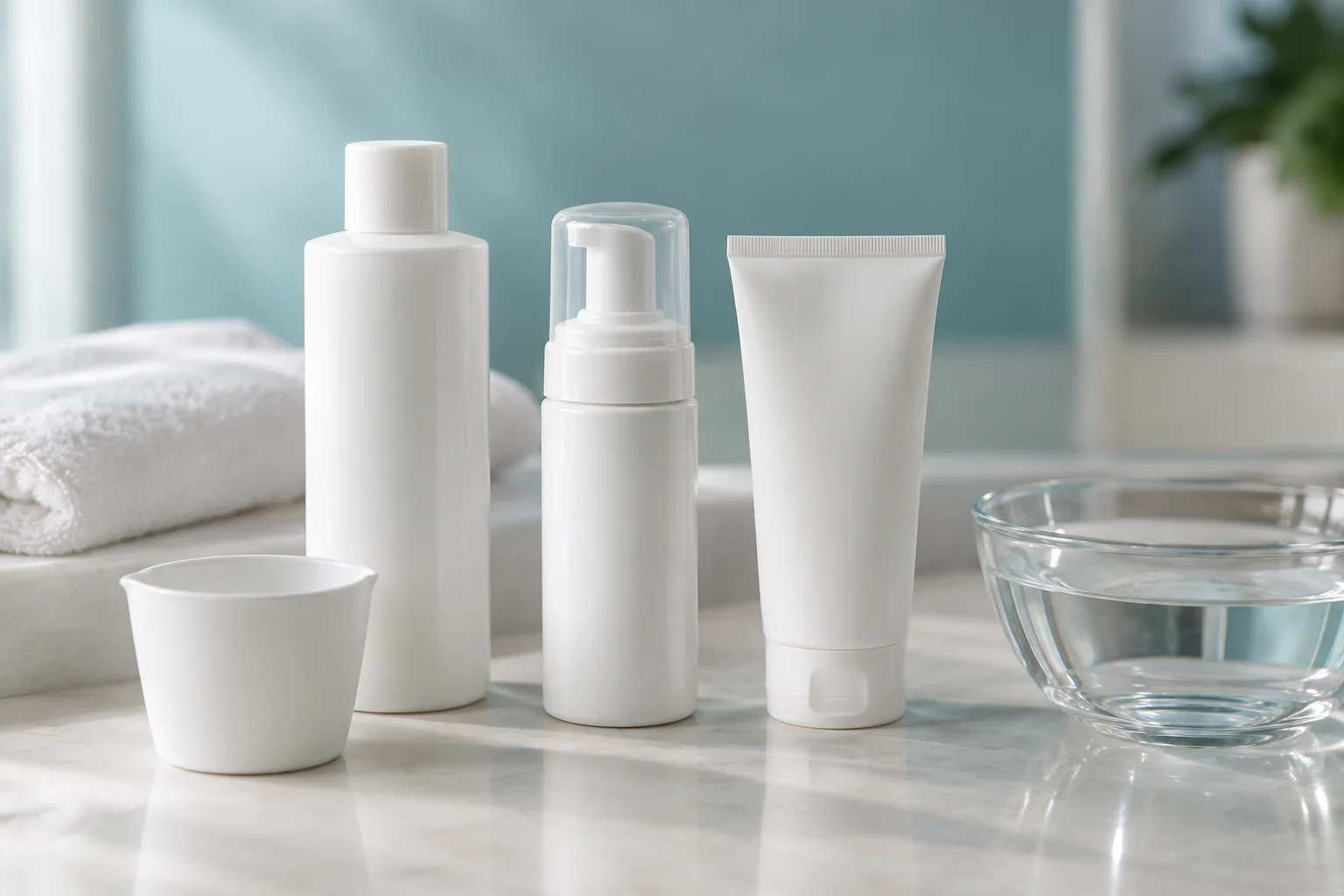
Shampoo cleans and is rinsed off. Depending on its ingredients, foam or lotion may be provided for cleansing or softening scabs. Follow your care instructions for your product’s application time and frequency; do not mix products.
How should I take follow-up photographs?
With dry hair, use similar lighting and no filters. Photograph the front, both sides, the top and the donor area from behind. Matching angles and hair length make comparison easier.
Is the shed hair my graft?
Temporary shedding of hair shafts is common and does not by itself show graft loss. Tell the clinic if there is bleeding, an impact or tissue separation.
Will a hair transplant stop my existing hair loss?
No. Hair outside the transplanted areas may continue to thin. Discuss protective treatment options and their risks with your clinician during long-term follow-up.
Sleep and sleeping position
Supporting and raising the head and upper body in the first nights may help manage swelling. Avoid friction or pressure on the recipient area; a neck pillow should not press on a sensitive donor area. Follow your individual plan for the angle and number of nights.
See the relevant stage and details →The first wash and shower
Start washing at the time specified by your clinic. Wash your hands and use lukewarm, low-pressure water. Early on, avoid a strong direct shower jet, scraping with nails or rubbing with a towel. Your care instructions determine how to apply the product and how long to leave it on.
See the relevant stage and details →Cleaning the scabs
Small scabs may form from dried blood and wound fluid. Pulling them off early can damage grafts. Soften them with the recommended care and, only if your clinician allows it, clean gently with the soft pads of your fingertips. Do not force resistant scabs. Ask for assessment first if a scab is dark, painful or thick, or if there is discharge.
See the relevant stage and details →Donor area and back-of-head care
The donor area is where grafts were harvested; the recipient area is where they were placed. Dressing, cleaning and softening instructions may differ. Do not automatically use a donor-area product on the recipient area. Do not massage an open wound or an area with increasing tenderness.
See the relevant stage and details →Medicines and supportive therapies

Follow your prescription and do not stop regular medicines on your own. Minoxidil, finasteride, PRP, mesotherapy, vitamins and dermarolling are not a compulsory care package for every patient. Indication, risks, pregnancy-related considerations and starting time require an individual medical assessment. Do not self-treat open or irritated skin.
See the relevant stage and details →Work, travel and social life
Returning to desk work is different from returning to dusty work, heavy exertion or a job requiring a helmet. How you feel, wound healing and follow-up must be considered together. Protect the recipient area from knocks, friction and tight headwear.
See the relevant stage and details →Haircuts, barbers and hair products
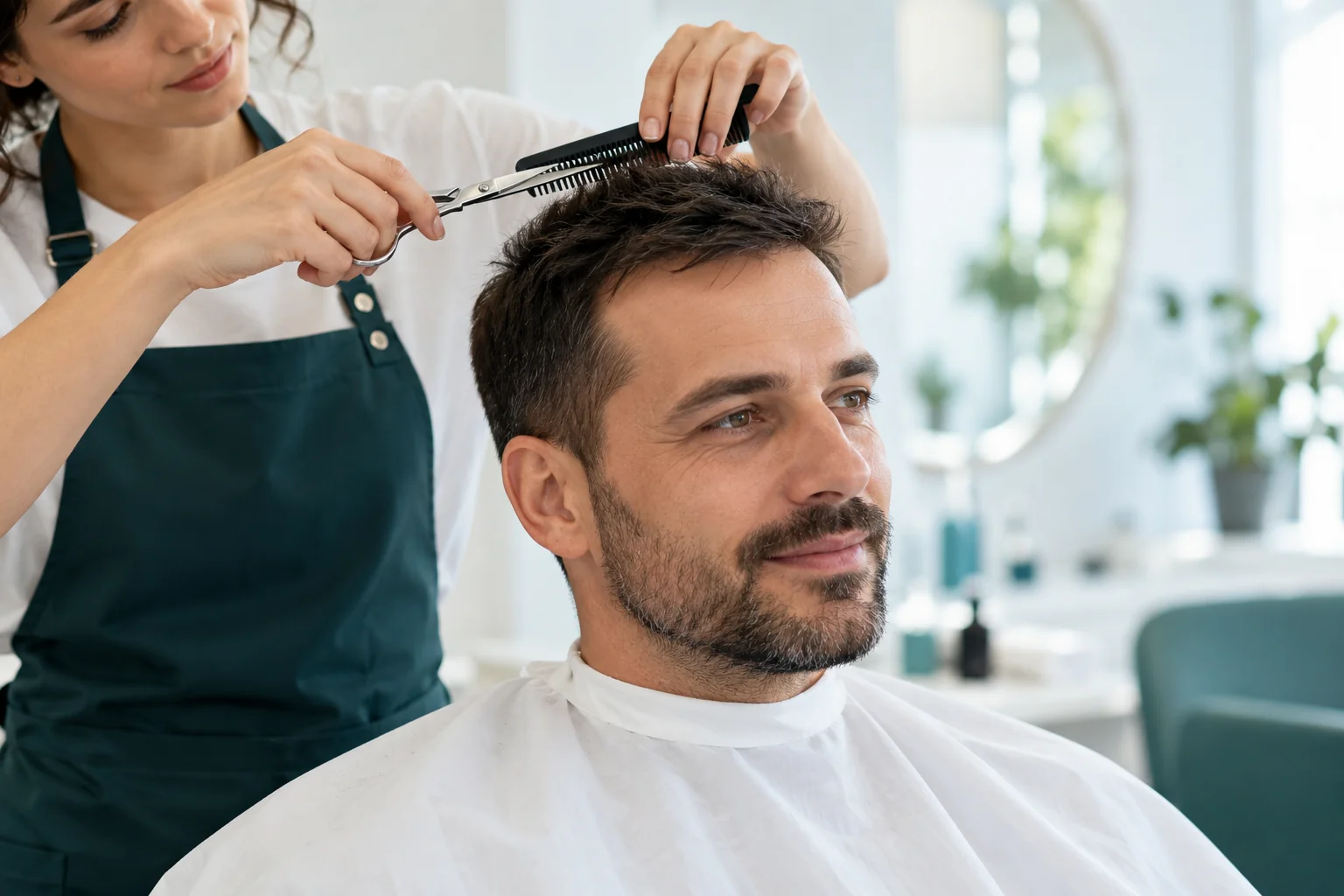
If the skin has healed, a scissor trim without touching the skin may be considered from around week two; clippers with a guard may be considered around week four with medical approval. These are not firm research-based limits. Do not use razors, straight razors, dyes or styling products on open or irritated skin. Tell your barber about the procedure and sensitive areas.
See the relevant stage and details →Sun, sea and swimming pools

Avoid sunburn; choose shade and a non-compressive hat approved by your clinician. Do not swim while there are open wounds or scabs. Return to pools, the sea, saunas and steam baths requires a personal healing review; no single day is proven safe for everyone. Do not apply sunscreen to an open wound.
See the relevant stage and details →Expected symptoms and when to seek help
Mild tightness, tenderness and itching may occur. Contact the clinic the same day for increasing pain, spreading redness or warmth, pus, an unpleasant smell, dark colour change, fever or ongoing bleeding. For breathing difficulty, chest pain, fainting, lip or tongue swelling, sudden vision changes or uncontrollable bleeding, do not wait for a WhatsApp response: call 112 in Türkiye or go to the nearest emergency department.
See the relevant stage and details →No results found. Try another word or contact your clinic.
The science behind scab care
During early healing, dried blood and wound fluid may form surface scabs. Pulling off an adherent scab is not the same as gently removing one that has loosened on its own.
In Bernstein and Rassman’s 2006 study, 289 mechanical pulling tests were performed in 42 patients. Pulling adherent scabs caused graft loss through the first five days; by day nine, the test did not dislodge grafts. This small study was not specific to modern DHI. It does not establish that everyone can massage vigorously on day nine or guarantee survival of all grafts. [1]
Meyer and colleagues’ 2026 study was an uncontrolled pilot in 21 men after FUE, evaluating a multi-ingredient shampoo containing 2% salicylic acid. Scab scores decreased and redness increased temporarily after washing. Long-term graft survival and superiority over other products were not demonstrated. Cantabria Labs funded the study; two authors disclosed professional relationships with the company. The findings cannot be generalised to all DHI patients. This product or salicylic acid is not standard care to start on your own. [6]
Follow your personal care plan for product choice and application time. Do not force scab removal from an unhealed open wound or if infection or dark eschar is suspected; request a clinical assessment.
WHEN SHOULD I SEEK HELP?
When should I seek help?
Contact your clinic the same day for increasing pain, spreading redness or warmth, an unpleasant smell, pus, dark colour changes, fever or ongoing bleeding. For bleeding, follow your clinician’s specific instructions for the recipient or donor area. If it cannot be controlled, seek emergency care.
Sharing your surgery date, when the problem started and a clear photograph can help the assessment.
Contact the clinic on WhatsApp ↗Phone: +90 534 496 88 88
SCIENTIFIC BACKGROUND
How was this guide prepared?
This patient aftercare guide uses selected clinical studies, expert consensus and patient information. Direct research evidence is distinguished from expert opinion. In particular, return-to-activity dates depend on individual healing and medical advice.
- Bernstein RM, Rassman WR. Graft anchoring in hair transplantation. Dermatol Surg. 2006. Graft anchoring: study in 42 patients. A mechanical anchoring experiment, not a direct comparison of aftercare for modern DHI. Author-published text →
- International expert consensus on pre- and post-hair transplantation care. 2023. Expert advice and follow-up. This is an expert consensus; the publisher’s full text was not accessible at the source check, so its details were not all treated as verified.
- Complications in follicular unit excision hair transplantation. 2026. Review of complications.Open full text →
- NHS: Hair transplant. Patient information and outcome timeline. General patient information; this page’s example washing schedule does not replace the clinic’s individual plan.
- WHO: Smoking and surgical complications. Smoking and healing in general surgery. Adapted from general surgery; it does not establish a safe day to resume smoking after a hair transplant.
- Meyer T et al. Early removal of post-operative scabs after follicular unit extraction using a 2% salicylic acid keratolytic shampoo. 2026. Direct clinical pilot: 21 men, no control group, commercial funding and relationships. Not evidence of product superiority or long-term graft survival.
Source check: 27 October 2026. Sources do not replace a personal medical examination. Inaccessible book chapters were not presented as sources that had been read.
Continue reading
Stay in touch with your clinic
Share your surgery date, when your symptoms started and a clear photograph. Do not wait for a message reply if you have emergency symptoms.